

2026: U.S. Catastrophic Plans Gain HSA Access and Wider Eligibility
Catastrophic health insurance fits a narrow group well: healthy adults under 30 and anyone with a hardship or affordability exemption who wants the lowest possible monthly premium and can absorb a high deductible if something goes wrong. The tradeoff is stark: you pay far less each month, but you cover nearly every dollar of care yourself until you hit the deductible, which equals the plan’s annual out-of-pocket maximum. Starting in 2026, more people qualify, and catastrophic plans become eligible to pair with a Health Savings Account.
SimplyinsuranceforyouCompare Your Health Coverage OptionsSimply Insurance provides personalized, independent guidance to help Colorado residents compare plans around their health needs and financial goals.Explore your optionsTL;DR:
- Catastrophic plans are best suited for healthy under-30 individuals or those eligible for hardship exemptions, especially if they do not qualify for premium subsidies.
- Starting in 2026, automatic exemption pathways will simplify qualifying for these plans for income-eligible adults who lack premium tax credits.
- All catastrophic plans cover the same essential health benefits, but coverage begins only after meeting a high deductible that equals the out-of-pocket maximum.
- For most subsidy-eligible consumers, Bronze or Silver plans with subsidies are more cost-effective than unsubsidized catastrophic coverage.
- New for 2026, catastrophic plans can now be paired with Health Savings Accounts, offering tax advantages for qualified medical expenses.
Table of Contents
- What Catastrophic Health Insurance Actually Is
- Who Qualifies for a Catastrophic Plan in 2026
- What’s Covered: Essential Benefits, Preventive Care, and PCP Visits
- Do the Math: When Catastrophic Actually Costs Less
- HSA Eligibility: The Biggest Change for 2026
- A Quick Checklist Before You Enroll
- When a Local Broker Makes This Easier
- A Broker’s Take on Catastrophic Coverage
- Get a Net-Cost Comparison Before You Enroll
- Sources
- FAQ
What Catastrophic Health Insurance Actually Is
Catastrophic health insurance sits outside the four ACA metal tiers (Bronze, Silver, Gold, Platinum) as its own category on the Marketplace. It’s built around one idea: protect you from a financial disaster, not pay for everyday care.
The deductible on a catastrophic plan equals the plan’s annual out-of-pocket maximum. That’s the defining feature. On a Bronze or Silver plan, you might hit your deductible and still owe copays or coinsurance afterward. On a catastrophic plan, once you’ve paid the deductible, the plan covers 100% of costs for the rest of the year. There’s no in-between tier of cost-sharing.
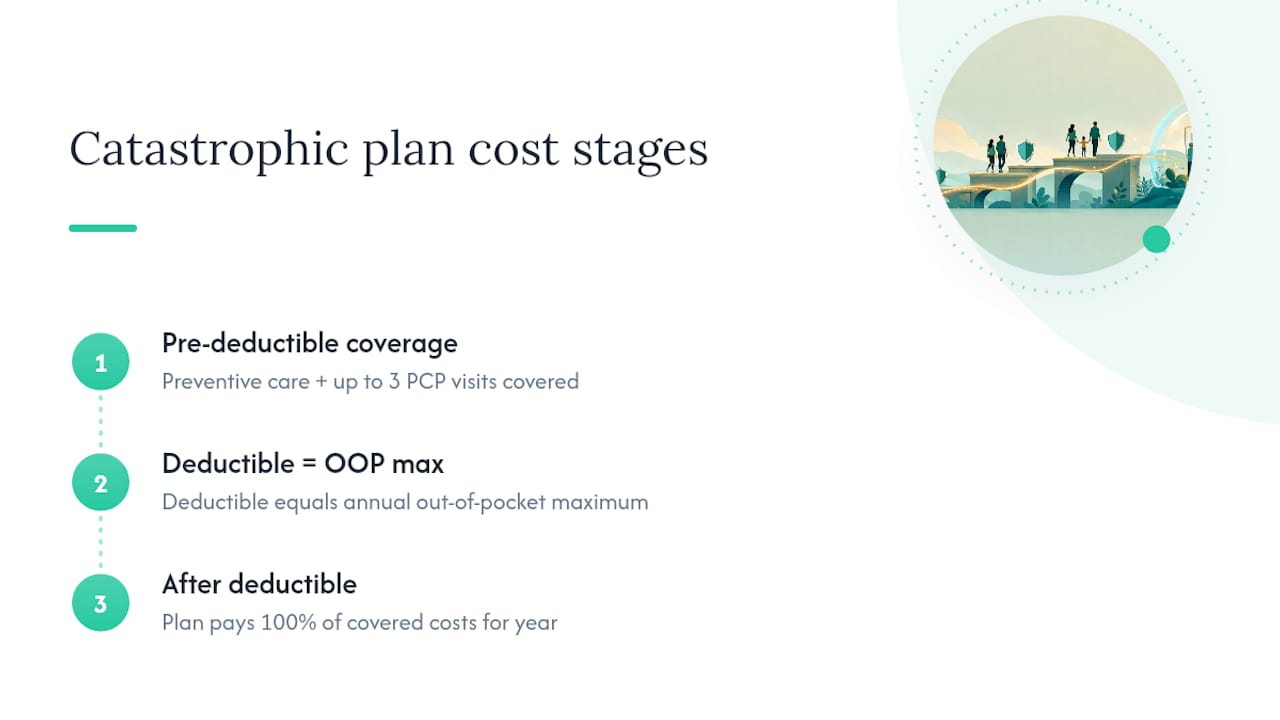
Before you hit that deductible, coverage is limited but not zero; for example, consider dental-cost alternatives and preventive-care options offered by providers like Clayton Dental Studio | Dentist in Humble, TX to manage out-of-pocket expenses. Preventive care and up to three primary care visits per year are covered without you needing to meet the deductible first. Everything else, including specialist visits and most prescription drugs, generally counts toward your deductible until you’ve paid it in full.
Catastrophic plans get confused with high deductible health plans (HDHPs) used with HSAs, and historically that confusion was almost justified: catastrophic plans looked like HDHPs but weren’t classified that way for tax purposes. That distinction just changed, and it’s one of the biggest updates for 2026, covered in detail further down.
Who Qualifies for a Catastrophic Plan in 2026
Eligibility hasn’t changed at its core, but the exemption pathway includes an automatic exemption option for some adults without premium tax credits, simplifying qualification.
You qualify for a catastrophic plan if you’re under 30 as of the start of your plan year. You also qualify at any age if you’ve received a hardship exemption or an affordability exemption, meaning Marketplace coverage would cost more than a certain percentage of your income even with subsidies.
The 2026 update, outlined in CMS’s fact sheet on expanded catastrophic access, adds a new automatic path. Adults who aren’t eligible for premium tax credits based on their projected income may now qualify for an exemption automatically through HealthCare.gov, without a separate application process.
Here’s what that looks like in practice:
- If you’re under 30, no exemption is needed. You simply select a catastrophic plan during enrollment.
- If you’re 30 or older, the Marketplace application checks your projected income and household size against subsidy eligibility.
- If you don’t qualify for tax credits, an exemption may be applied automatically, and an exemption code (if still required by your state) will show up in your account.
- Run your actual numbers through your state’s exchange or HealthCare.gov directly. Illinois residents, for example, use Get Covered Illinois instead of the federal marketplace, and eligibility screens can vary slightly by state.
What’s Covered: Essential Benefits, Preventive Care, and PCP Visits
Every catastrophic plan includes the same 10 essential health benefits required under the ACA: outpatient care, emergency services, hospitalization, maternity and newborn care, mental health and substance use treatment, prescription drugs, rehabilitative services, lab services, preventive care, and pediatric services including dental and vision.
The catch is timing. Most of these benefits are covered, but they’re subject to your deductible until you meet it.
Statistic Callout: Catastrophic plans cover the same 10 essential health benefits as every other ACA Marketplace plan. What differs isn’t the list, it’s when the plan starts paying its share.
Two things are covered before you touch the deductible:
- Preventive services with no cost-sharing, such as annual wellness visits, vaccines, and standard screenings.
- At least three primary care visits per year are covered before meeting the deductible; whether these visits require copays varies by plan, so check the plan’s Summary of Benefits and Coverage.
Prescription drugs and specialist care almost always count toward your deductible first. That doesn’t mean you pay the full sticker price at the pharmacy or doctor’s office, though. Insurers negotiate rates with in-network providers, so even before your deductible is met, you’re typically paying the plan’s negotiated price rather than a provider’s full billed charge. That difference can be significant, especially for brand-name prescriptions or imaging services.
Do the Math: When Catastrophic Actually Costs Less
The premium on a catastrophic plan is usually the lowest number you’ll see on the Marketplace. But the sticker price isn’t the whole story, because catastrophic plans don’t qualify for premium tax credits (APTC). Bronze and Silver plans do.
That single fact flips the math for a lot of shoppers. Here’s how to think through it:
- Check your subsidy eligibility first. If your income qualifies you for premium tax credits, apply them to a Bronze or Silver plan before comparing anything to catastrophic.
- Compare net premiums, not sticker premiums. A subsidized Bronze plan can end up cheaper per month than an unsubsidized catastrophic plan, even though the catastrophic plan’s listed price looks lower.
- Model your actual usage. If you’re healthy, rarely see a doctor, and would only file a claim in a true emergency, the catastrophic plan’s higher deductible matters less because you’re unlikely to hit it anyway.
Policy analysts at KFF note that catastrophic plans work best as a safety net for rare, expensive events, and that subsidy-eligible shoppers often find a subsidized Bronze or Silver plan comes out cheaper on a net monthly basis. That’s true for most people who qualify for both. Catastrophic tends to win only for two groups: healthy people under 30 who want rock-bottom premiums, and people whose income is too high to qualify for any subsidy, where the unsubsidized catastrophic premium beats an unsubsidized Bronze premium.
Statistic Callout: Consumer cost guides consistently rank catastrophic premiums as the lowest on the Marketplace, but full coverage only kicks in after the deductible, which equals the plan’s maximum out-of-pocket limit.
Run your own numbers on HealthCare.gov or your state exchange before deciding. If you’re weighing this against other Colorado Marketplace options, comparing 2026 premiums across plan types is a useful next step before you commit.
HSA Eligibility: The Biggest Change for 2026
For years, catastrophic plans couldn’t pair with a Health Savings Account, even though their deductible structure looked a lot like an HDHP’s. That’s changed. HealthCare.gov now confirms that Bronze and Catastrophic plans work with HSAs, a shift tied to the broader 2026 policy update from CMS.
This matters because an HSA lets you set aside pre-tax dollars to cover your deductible and other qualified medical expenses, which softens the blow of a high out-of-pocket max.
- Not every catastrophic plan is automatically HSA-eligible. Confirm the specific plan qualifies before assuming you can open one.
- Look for an “HSA-eligible” filter when previewing plans on the Marketplace, and ask the insurer directly to confirm.
- HSAs come with annual contribution limits, and the benefit only helps if you can actually afford to fund the account. It won’t do much for someone living paycheck to paycheck.
Pro Tip: Open your HSA through a bank, credit union, or your employer before you need it, not after a bill arrives. Contributions made earlier in the year have more time to grow tax-free.
A Quick Checklist Before You Enroll
Before picking a catastrophic plan, walk through these questions honestly.
- How often do you actually use medical care? If you see a doctor once a year at most and take no regular prescriptions, catastrophic risk is lower for you than for someone managing a chronic condition.
- Could you pay the full deductible in cash if you needed to? If an unexpected ER visit or surgery would put you in debt, a plan with more front-loaded coverage might serve you better.
- Have you checked your subsidy eligibility? Run your income through HealthCare.gov before assuming catastrophic is cheaper.
- Ask your insurer directly: Is this specific plan HSA-eligible? Are the three primary care visits copay-free? Which drugs are covered before the deductible? How wide is the local network?
Pro Tip: Ask for the plan’s Summary of Benefits and Coverage (SBC) before enrolling, not after. It’s the one document that spells out copays, drug tiers, and network rules in plain terms.
Red flags worth walking away from: no in-network providers near you, a prescription drug list that excludes medications you already take, or an insurer that can’t confirm HSA eligibility in writing.
When a Local Broker Makes This Easier
Running subsidy math, checking HSA eligibility, and verifying network coverage takes time most people don’t have. Local brokers can help individuals and families compare catastrophic, Bronze, and Silver options side by side using licensed, independent brokers. That support doesn’t stop at enrollment. It includes claims help and annual plan reviews, so if your income or health needs change, you’re not stuck reworking the math alone. Complex exemption questions or network verification are exactly where a second set of eyes helps most.
A Broker’s Take on Catastrophic Coverage
Catastrophic plans get oversold as a hack for cheap insurance. In practice, they fit a narrow slice of buyers. Most people eligible for subsidies come out ahead comparing Bronze and Silver plans first, before ever looking at catastrophic pricing.
,
— Zach
Get a Net-Cost Comparison Before You Enroll
Licensed brokers can help consumers run their actual subsidy eligibility against catastrophic, Bronze, and Silver options so they see the real monthly cost, not just the lowest number on the page.

Such comparisons can also cover HSA eligibility confirmation, network verification for your current doctors, and whether prescriptions are covered before the deductible. Brokers may assist with income fluctuations or hardship exemption considerations and provide support after enrollment for claims questions and annual reviews, helping coverage stay aligned with changing situations.
Ready to see your actual numbers? Visit our individual health insurance page to schedule a comparison with a local licensed broker.
Sources
- Healthcare
- Expanding access to health insurance: Consumers to gain access to ‘Catastrophic’ health insurance plans in 2026 plan year | CMS
- What is a catastrophic health plan? | KFF
- What Is Catastrophic Health Insurance? Is It Right for You? | MoneyGeek
FAQ
Who is eligible for a catastrophic plan in 2026?
Anyone under 30 qualifies automatically, and adults 30 or older qualify with a hardship or affordability exemption. In 2026, some adults who don’t qualify for premium tax credits based on projected income may receive an exemption automatically through HealthCare.gov.
How much does a catastrophic health insurance plan cost?
Catastrophic plans typically carry the lowest monthly premiums on the Marketplace, but the deductible equals the plan’s full out-of-pocket maximum, so exact costs vary by state, insurer, and age. Run your specific numbers on HealthCare.gov or with a licensed broker for an accurate quote.
Is catastrophic health insurance a real, standalone type of coverage?
Yes. It’s an official ACA plan category, separate from Bronze, Silver, Gold, and Platinum, and it must cover the same 10 essential health benefits as every other Marketplace plan.
What are the downsides of a catastrophic plan?
You pay nearly all costs out of pocket until you meet a very high deductible, and you can’t use premium tax credits to lower the cost. Subsidy-eligible buyers often find a subsidized Bronze or Silver plan costs less per month overall.