

Avoid Recovery Letters: Medicare Coordination for U.S. Seniors, CO Help
Coordination of benefits (COB) is the process Medicare and your other insurer use to decide who pays a claim first. For most people, the rule comes down to employer size and job status: if you or your spouse works for a company with a large number of employees, that group plan usually pays first. Smaller employer, retiree status, or COBRA generally means Medicare pays first. If your coverage changed recently, call the Benefits Coordination & Recovery Center (BCRC) and tell your provider before your next visit.
SimplyinsuranceforyouGet Clearer Medicare GuidanceSimply Insurance provides personalized, independent guidance for comparing Medicare and health insurance options across Colorado.Explore your optionsTL;DR:
- Employer size significantly influences who pays first, with large employers typically covering before Medicare, regardless of employment or retiree status.
- Medicare can make conditional payments if the primary insurer hasn’t paid within 120 days, and it seeks reimbursement if another payer is ultimately responsible.
- Beneficiaries must proactively report coverage changes within 30 days to avoid billing surprises and ensure Medicare records are accurate.
- Medicare Advantage and Part D plans may investigate coverage on their own, so timely responses to insurer inquiries are essential to prevent claim delays.
- Keeping thorough records and confirming coverage updates with the BCRC can prevent costly recovery notices and ensure correct payer order.
Table of Contents
- Who Pays First: Medicare vs. Other Insurance
- What Happens When Medicare Makes a Conditional Payment?
- How to Report or Update Your Other Insurance
- Medicare Advantage and Part D: A Different Coordination Process
- Checklist: Avoiding Billing Surprises
- How Simply Insurance Helps Untangle Coordination Problems
- Why Beneficiaries Get Coordination Wrong
- Get Your Coverage Checked Before a Claim Gets Denied
- Where to Verify These Rules Yourself
- Sources
- FAQ
Who Pays First: Medicare vs. Other Insurance
The payer order isn’t guesswork. It follows a specific set of rules the Centers for Medicare & Medicaid Services (CMS) applies based on why you have Medicare, how you’re employed, and what other coverage you carry.
Employer size is the single biggest factor for working beneficiaries. If your employer (or your spouse’s) has a large number of employees, that group health plan pays first and Medicare pays second. For smaller employers, Medicare typically becomes primary, with the employer plan picking up whatever’s left. This holds whether you’re actively working or covered through a spouse’s job.
Retirees have a simpler rule: once you stop working, retiree coverage almost always pays second to Medicare, regardless of how big the former employer was. The active employment tie is what changes everything.
A few other coordination patterns matter just as much:
- Disability-based Medicare: if you’re under 65 and have Medicare due to disability, the same large-employer-plan-pays-first logic applies when the employer has 100 or more employees.
- ESRD: people who qualify for Medicare due to End-Stage Renal Disease get a 30-month coordination period during which a group or retiree plan pays first, no matter the employer’s size. After that window, Medicare typically takes over as primary.
- COBRA: COBRA continuation coverage pays second to Medicare in most cases, not first.
- TRICARE: for military retirees, TRICARE For Life pays after Medicare.
- Medicaid: Medicaid never pays first for anything Medicare covers. It’s the payer of last resort, stepping in only after Medicare and every other applicable plan has paid.
What Happens When Medicare Makes a Conditional Payment?
Sometimes Medicare pays a claim before the primary insurer has settled its share. That’s called a conditional payment, and it exists so your care doesn’t get delayed while insurers sort out who owes what.
Here’s how it typically plays out:
- A provider bills the insurance believed to be primary.
- That insurer doesn’t pay the claim within the 120-day window most providers expect for a response.
- The provider bills Medicare instead, and Medicare pays conditionally to keep the claim moving.
- If it later turns out another payer was responsible, Medicare seeks reimbursement.
The 120-day mark is the trigger point. Once a claim sits unpaid past that timeframe, providers are generally allowed to bill Medicare conditionally rather than keep waiting on the other insurer.
Recovery from a conditional payment isn’t handled by one office. The BCRC and the Commercial Repayment Center (CRC) split the work: the BCRC manages your insurance records and initial recovery notices, while the CRC pursues recovery specifically from group health plans and certain other liable parties. If you get a letter from either office, don’t ignore it. Respond promptly and keep copies of everything you send.
How to Report or Update Your Other Insurance
Medicare’s records are only as good as the information it receives, and gaps happen more often than people expect. You’re ultimately the one responsible for keeping that information current.
At every appointment, give your provider your full insurance picture: policy numbers, coverage start and end dates, and your employer’s name and size if the coverage is job-based. This single habit prevents most of the billing confusion that leads to recovery letters months later.
To update Medicare directly, contact the BCRC at 1-855-798-2627 (TTY: 1-855-797-2627). Have these ready before you call:
- Your Medicare number
- The name of the other insurance carrier and your policy number
- The effective date of any coverage change
- Employer name and approximate employee count, if relevant
Pro Tip: Call the BCRC within 30 days of any coverage change, whether that’s losing a job, retiring, or adding a spouse’s plan. Waiting until a claim gets denied means you’re untangling the problem after the fact instead of before it.
If you’re not sure your insurer already reported your coverage to Medicare, ask them directly, then follow up with the BCRC to confirm the record matches.
Medicare Advantage and Part D: A Different Coordination Process
If you’re enrolled in a Medicare Advantage plan or a standalone Part D plan, coordination doesn’t run entirely through the BCRC and COBA program. Private plans often investigate other coverage on their own and may send you a questionnaire asking you to confirm what insurance you have.
Answer these promptly. A Medicare Advantage plan that suspects unreported coverage can delay claims or seek recovery directly, separate from anything the BCRC is doing. Keep copies of anything you send back. Some insurers have automatic crossover agreements with Medicare through COBA, meaning claims flow to your secondary payer without extra paperwork. Without that agreement, you or your provider have to submit the secondary claim manually.
Checklist: Avoiding Billing Surprises
A few habits catch most coordination problems before they turn into recovery letters.
- Bring your current insurance cards, including any employer or Medigap policy numbers, to every appointment.
- Keep a folder (paper or digital) with employer benefits letters, COBRA election notices, and any settlement paperwork tied to your coverage.
- Watch for two red flags: an unexpected conditional payment notice, or a recovery demand letter you didn’t see coming. Both mean your coverage information on file is likely outdated.
- If a provider bills you directly for something you believe Medicare or your secondary insurer should cover, call the BCRC before paying.
Pro Tip: Save every letter from the BCRC or CRC, even ones that seem routine. If a dispute arises later, that paper trail is what proves you reported changes on time.
How Simply Insurance Helps Untangle Coordination Problems
Figuring out which plan pays first gets complicated fast, especially with employer coverage, retiree plans, or Medigap in the mix. Licensed brokers help clients confirm which payer is primary, walk through BCRC reporting steps, and document insurer responses so nothing falls through the cracks. That support doesn’t stop at enrollment. Annual reviews and claims follow-up catch coordination issues before they become recovery demands.
Why Beneficiaries Get Coordination Wrong
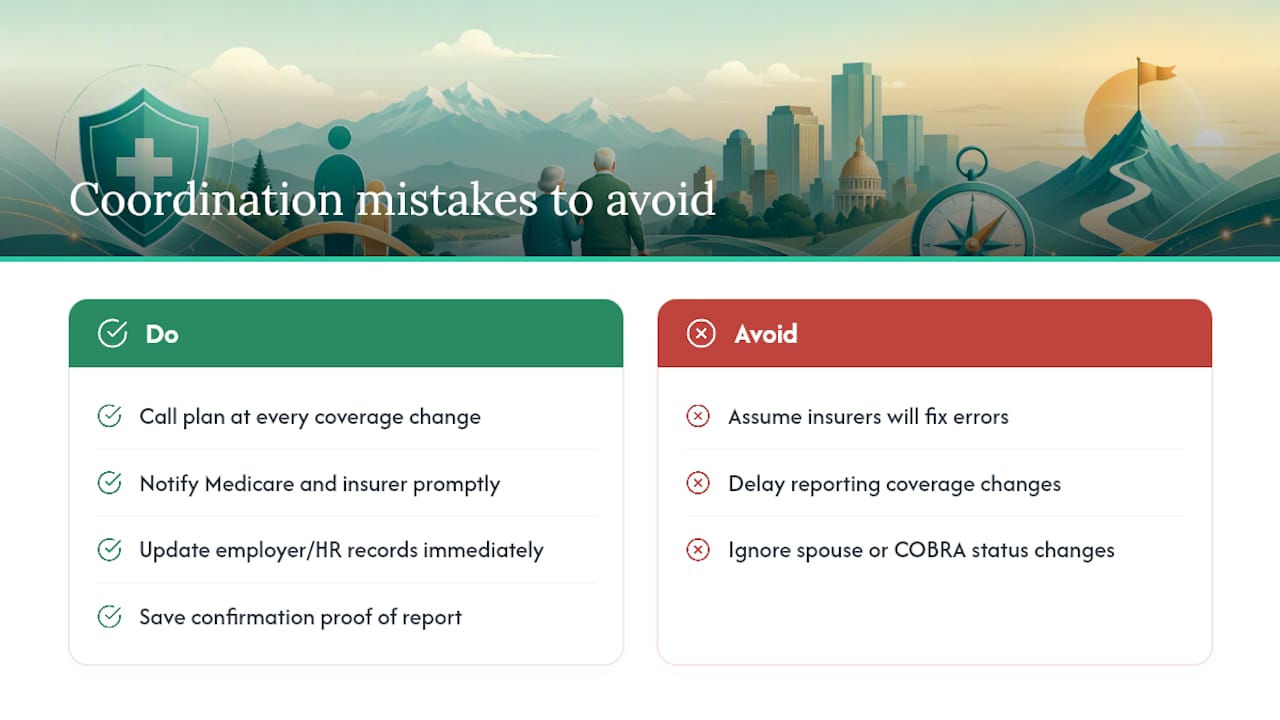
Most guidance on coordination of benefits treats it as a one-time enrollment question: figure out who pays first, then move on. That’s backward. Payer order changes every time your employment status, employer size, or coverage type shifts, and almost nobody updates their records when that happens. Retirement, a spouse’s job change, or losing COBRA all flip who pays first, yet the BCRC only knows what gets reported.
The bigger blind spot is assuming Medicare or your insurer will sort it out automatically. They won’t, not reliably. The COBA program handles a lot of data exchange behind the scenes, but it can’t fix information nobody sent it. If there’s one thing worth prioritizing over everything else in this guide, it’s this: treat every coverage change as a phone call to make, not a form to fill out later. The recovery letters people dread almost always trace back to a gap that sat unreported for months.
— Zach
Get Your Coverage Checked Before a Claim Gets Denied
This service is the alternative to guessing your way through Medicare paperwork. Instead of piecing together payer rules from government PDFs, you can get help from a broker who checks your specific situation, employer size, retiree status, ESRD timing, and tells you who should be paying first.

If you’ve recently retired, lost employer coverage, or just aren’t sure your Medicare records match your current insurance, that’s exactly the kind of gap that turns into a recovery letter six months from now. A quick record check now costs you nothing and can save weeks of back and forth with the BCRC later. Visit the Simply Insurance Medicare guide to schedule a coverage review, or reach out directly if you’re already facing a conditional payment notice you don’t understand.
Where to Verify These Rules Yourself
For official guidance, see Medicare.gov’s coordination page, the CMS Coordination of Benefits & Recovery overview, and the BCRC contact line at 1-855-798-2627.
This article is general information, not a substitute for advice from a qualified financial advisor. Consult a qualified financial professional about your own circumstances before acting on anything here.
Sources
FAQ
Does Medicare Do Coordination of Benefits?
Yes. Medicare coordinates with employer plans, Medigap, Medicaid, TRICARE, and other coverage through the BCRC and the COBA program, which determines who pays first and processes claims to the secondary payer.
How Do I Contact Medicare Coordination of Benefits?
Call the BCRC at 1-855-798-2627 (TTY: 1-855-797-2627) to report other insurance, correct your records, or ask who should be paying first for a specific claim.
What Are the Rules for Coordination of Benefits?
Payer order generally depends on employer size (20+ employees means the group plan pays first), employment status, and the reason you have Medicare, with special rules for ESRD’s 30-month period and Medicaid always paying last.
How Do I Update My Coordination of Benefits With Medicare?
Contact the BCRC directly with your Medicare number, the other insurer’s name and policy number, and the date your coverage changed, and confirm your provider has the same information on file.
What Happens if Medicare Pays a Claim by Mistake?
The CRC or BCRC will send a recovery notice requesting repayment; respond promptly and keep records of your correspondence, since a Colorado broker like Simplyinsuranceforyou can help you document the dispute if the claim needs to be contested.