

Seniors: Use SHIP and Brokers to Avoid Surprise Medicare Dental Bills
Original Medicare does not cover routine dental care, and that surprises a lot of people the year they turn 65… Cleanings, fillings, dentures, extractions: none of it is included under Parts A and B except in rare medically necessary cases. Most seniors who want real dental coverage get it through a Medicare Advantage plan or a separate dental policy, and dual-eligible beneficiaries should check their state’s Medicaid dental rules. Your next move is simple: pull up your plan’s Evidence of Coverage or call a SHIP counselor or licensed broker before you assume you’re covered.
SimplyinsuranceforyouCompare Medicare Coverage With ConfidenceGet personalized guidance from licensed brokers to compare Medicare and supplemental insurance options for your health needs and financial goals.Explore your coverage optionsTL;DR:
- Original Medicare does not cover routine dental care such as cleanings, fillings, or dentures, except in rare medical-linked cases like trauma or cancer treatment.
- Most seniors find dental coverage through Medicare Advantage plans, which generally offer some preventive services with frequent coinsurance, or through separate plans and Medicaid if eligible.
- Dental benefits in Medicare Advantage plans typically have annual caps around $1,000 to $1,300, with major procedures often costing 50% or more in coinsurance.
- Reviewing the Evidence of Coverage and reassessing benefits during enrollment periods is crucial to avoid unexpected limits or dropped services.
- Using licensed brokers, SHIP counselors, or community resources can help compare plans and secure affordable dental coverage tailored to individual needs.
Table of Contents
- What Medicare Dental Coverage Actually Includes
- Where Seniors Actually Get Dental Coverage
- How to Compare Dental Benefits Across Plans
- What Dental Coverage Actually Costs You
- Your Next Steps to Lock In Dental Coverage
- Why Dental Deserves a Real Look in Your Medicare Plan
- Get Local Help Comparing Dental Benefits in Colorado
- Sources
- FAQ
What Medicare Dental Coverage Actually Includes
Medicare.gov is blunt about this: routine dental services, including cleanings, fillings, tooth extractions, dentures, and dental implants, are not covered by Original Medicare in almost every circumstance. That single fact trips up more new enrollees than any other Medicare rule, mostly because people assume dental works like vision or hearing add ons under a standard health plan. It doesn’t.
There’s a narrow lane where Medicare will pay, and it only opens when dental care is tied directly to a medical procedure Medicare already covers. CMS calls this “inextricably linked” coverage, and it applies in situations like these:
- Dental exams and treatment required before an organ transplant
- Jaw reconstruction following an accident or traumatic injury
- Tooth extractions needed before radiation treatment for cancer of the jaw
- Dental services related to certain ESRD or transplant related complications
Here’s the number that matters: when Part B does step in for one of these linked services, you’re still responsible for 20% of the Medicare approved amount after meeting your Part B deductible, and Part A cost sharing applies if the service happens during a covered inpatient stay. Getting Medicare to pay even in these cases requires solid documentation from your doctor and dentist showing the connection to a covered medical treatment. Without that paperwork trail, claims get denied more often than approved.
Where Seniors Actually Get Dental Coverage
Since Original Medicare mostly sits out of dental, three real paths remain, and each fits a different kind of budget and need.
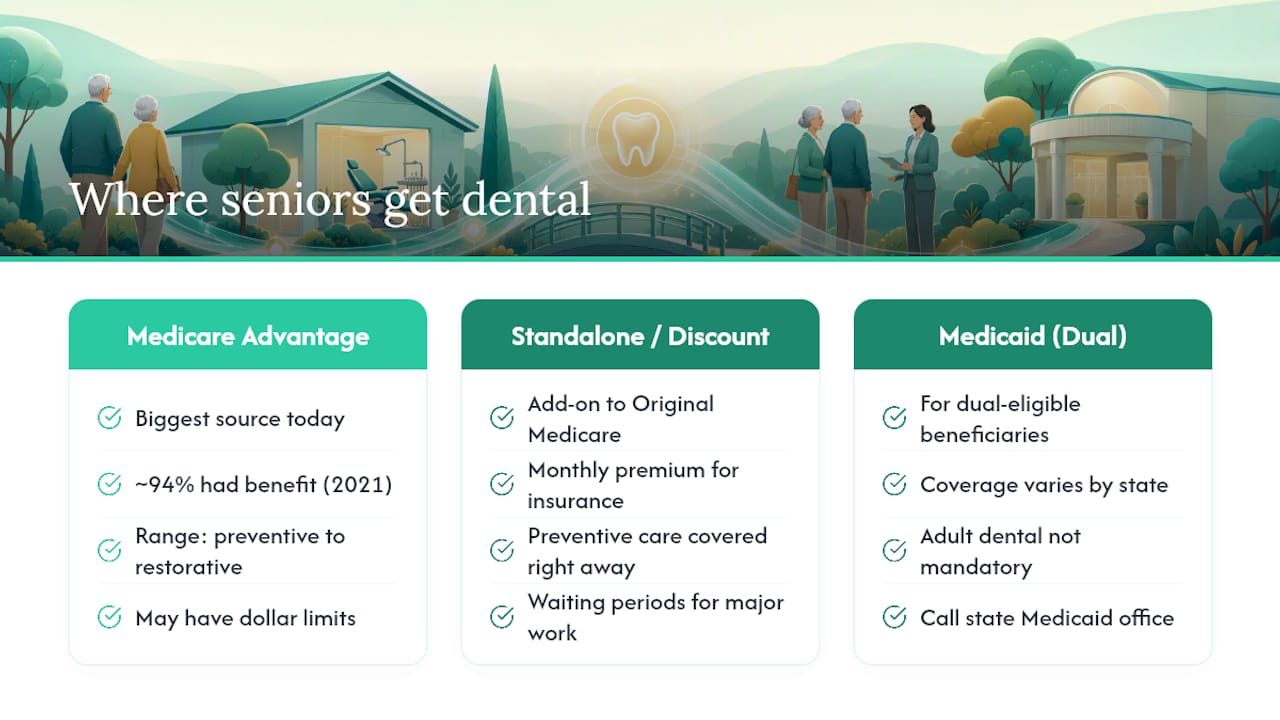
Medicare Advantage (Part C) plans are the biggest source of dental benefits for people on Medicare today. In 2021, roughly 94% of Medicare Advantage enrollees in individual plans had access to some form of dental coverage through their plan. Some plans offer only preventive care, like cleanings and exams, with no annual cap. Others bundle in restorative work, root canals, crowns, dentures, but attach a dollar limit and coinsurance that can run 50% or higher. Coverage also changes from year to year because these benefits are often funded through plan rebates rather than a fixed federal mandate.
Standalone dental insurance and discount plans work as an add on if you’re staying with Original Medicare or a Medigap policy that has no dental benefit. Insurance plans charge a monthly premium and typically cover preventive care right away, with waiting periods before major work like crowns or bridges. Discount plans skip the waiting period and insurance structure entirely; you pay a membership fee and get a negotiated lower rate at participating dentists. They’re worth considering if you need major work soon and can’t wait out a plan’s exclusion period.
Medicaid for dual-eligible beneficiaries covers dental in some states and not others, since adult dental is not a mandatory federal Medicaid benefit. If you qualify for both Medicare and Medicaid, call your state Medicaid office directly to confirm what’s covered before assuming either program has you handled.
For urgent or lower-cost care outside insurance entirely, dental schools, community health centers, and the Dental Lifeline Network all offer reduced-cost treatment for seniors on a tight budget.
Pro Tip: Don’t wait until you have a toothache to figure out your coverage. Review your dental options during your Initial Enrollment Period or the next Annual Enrollment Period, before you actually need a filling or crown.
How to Compare Dental Benefits Across Plans
Reading a plan brochure and reading an Evidence of Coverage document are two different exercises, and the second one is where the real answers live. Work through these five steps before you commit:
- Pull the Evidence of Coverage. This document lists exactly which dental services are included and which are explicitly excluded, not the marketing summary.
- Check the annual dollar cap and per-service limits. Ask directly how the plan handles crowns, root canals, and dentures, since these are usually where caps get hit fastest.
- Confirm cost-sharing on restorative work. Preventive cleanings and exams are often $0 in-network, but restorative procedures frequently carry coinsurance as high as 50%.
- Verify the provider network in your ZIP code. A plan can look generous on paper and still leave you with one dentist within driving distance, or none who’s accepting new patients.
- Reassess every Annual Enrollment Period. Dental benefits inside Medicare Advantage plans shift yearly, so what covered your neighbor’s dentures last year might not exist in the same plan next year.
A few extra questions worth asking any agent or plan rep:
- Is there a waiting period before major services are covered?
- Does the plan require referrals to see a specialist like an oral surgeon?
- What happens to your dental benefit if you switch plans mid-year?
A licensed broker or a SHIP counselor can walk through these Evidence of Coverage details with you line by line, which matters more than it sounds since these documents run long and dense.
What Dental Coverage Actually Costs You
Marketing materials love the word “comprehensive,” but the fine print usually tells a tighter story. Among Medicare Advantage plans offering more extensive dental benefits, the average annual cap sat around $1,300 in 2021, and more than half of enrollees in those richer plans were actually capped at $1,000 or less. A single crown or root canal can burn through that entire allowance in one visit.
Coinsurance follows a predictable pattern across most plans:
- Preventive care (cleanings, exams, X-rays): often $0 when you stay in-network
- Basic restorative work (fillings): moderate coinsurance, commonly in the 20% to 30% range
- Major services (crowns, dentures, root canals): coinsurance frequently reaches 50%, on top of the annual cap
If dental care happens to qualify under Original Medicare’s narrow medically necessary rule, expect to pay 20% of the Medicare-approved amount after your Part B deductible, plus any facility copay if you’re treated during a hospital stay.
Your Next Steps to Lock In Dental Coverage
Start with what you already have. Log into your Medicare Advantage plan portal or call member services and ask for your Evidence of Coverage, then check Medicare.gov’s Plan Finder tool to see what other plans in your area offer for dental.
Timing matters here. If you’re newly eligible, your Initial Enrollment Period gives you the first shot at picking a Medicare Advantage plan with dental built in. If you’re already enrolled and want to switch, the Annual Enrollment Period, running October 15 through December 7, is your window to change plans for better dental benefits starting the following January.
You don’t have to sort through this alone:
- SHIP counselors offer free, unbiased Medicare counseling in every state
- Your state Medicaid office can confirm dental benefits if you’re dual-eligible
- A licensed local broker can compare specific plan dental benefits side by side and help during AEP
- Community dental clinics and dental schools remain an option regardless of your insurance status
Why Dental Deserves a Real Look in Your Medicare Plan
Dental problems don’t stay contained to your mouth. Gum disease has been linked to complications in diabetes and heart conditions, which is exactly why treating dental coverage as an afterthought during enrollment season is a mistake I see too often. Medicare Advantage dental benefits are rebate-funded and change annually, so the plan that covered your dentures last year might look completely different come January. Reviewing your Evidence of Coverage every single Annual Enrollment Period isn’t optional busywork. It’s the only way to catch a shrinking cap or a dropped benefit before you’re sitting in a dentist’s chair finding out the hard way.
— Zach
Get Local Help Comparing Dental Benefits in Colorado
Licensed insurance brokers can help you compare Medicare Advantage dental benefits, standalone dental policies, and your Evidence of Coverage side by side. These services typically come at no direct cost to you, since brokers are generally compensated by the insurance carriers when you enroll through them.

If you’re turning 65, switching plans, or just found out your current dental cap dropped from last year, that’s exactly the kind of gap we catch during a plan comparison. Some brokers offer ongoing support after enrollment, including assistance with annual reviews and claims, to help clients manage their coverage effectively. Start by reviewing our Medicare Guide or check whether you qualify for dental coverage in Castle Pines, then book a no-cost consultation and bring your current Evidence of Coverage so we can compare it against what’s actually available in your ZIP code this year.
This article is general information, not a substitute for advice from a qualified doctor. Consult a qualified healthcare professional about your own circumstances before acting on anything here.
Sources
- Medicare
- CMS: Medicare coverage — dental
- KFF: Medicare and dental coverage — a closer look
- NCOA: Medicare and dental coverage
FAQ
Does Medicare Cover Dental Implants?
No, Original Medicare does not cover dental implants except in the rare case where implant related surgery is directly tied to a covered medical treatment, like reconstruction after cancer surgery.
Does Dental Insurance Cover Braces for Adults on Medicare?
Most standalone dental plans and Medicare Advantage dental benefits either exclude orthodontics like braces entirely or cover them only when medically necessary, so check the Evidence of Coverage for orthodontic exclusions before assuming coverage exists.
What Is the Average Annual Cap on Medicare Advantage Dental Benefits?
Among Medicare Advantage plans with more extensive dental coverage, the average annual cap was around $1,300 in 2021, with over half of those enrollees capped at $1,000 or less.
How Do I Know if My Medicare Advantage Plan Covers Dentures?
Check your plan’s Evidence of Coverage document directly, since denture coverage varies widely by plan and often carries a separate limit within the overall annual dental cap.
Can a Broker Help Me Compare Dental Benefits for Free?
Yes, licensed brokers like those at Simply Insurance compare Medicare Advantage and standalone dental plan details at no direct cost to you, since compensation comes from the insurance carrier upon enrollment.