
Publication time reported by BabyLoveGrowth, shown in Mountain time. This is not an independently measured first appearance on this website.

Which Plan Costs Less in the U.S. in 2026: HDHP vs PPO, HSA Limits and 3 Scenarios
If you rarely see a doctor and can cover a deductible from savings, an HDHP paired with an HSA usually costs less over the year. If you take regular medications or expect several visits, a PPO’s predictable copays typically save you money and hassle. Both claims depend on your specific numbers, which is why the rest of this guide shows you how to run them.
TL;DR:
- HDHPs generally have lower premiums but higher deductibles, making them cost-effective only if you rarely see a doctor or can pay the deductible from savings.
- PPOs feature higher monthly costs but offer predictable copays for visits and medications, ideal for those with regular healthcare needs or medications.
- Many PPOs meet IRS deductible minimums and are sold as PPOs, so always verify the specific plan details rather than assuming network type equals cost structure.
- An HSA paired with an HDHP provides tax advantages and rollover benefits, which can significantly offset high deductibles if used properly.
- Comparing total expected costs is essential, focusing on out-of-pocket maximums and annual claims, especially in worst-case scenarios, before choosing a plan.
Table of Contents
- HDHP vs PPO: What Makes a Plan HSA-Eligible in 2026?
- What Is a PPO and Why Do Costs Feel More Predictable?
- HDHP vs PPO Plans: Comparing Premiums, Deductibles, and Access
- How Does an HSA Change the HDHP vs PPO Math?
- How to Choose Between an HDHP and a PPO This Enrollment
- What a Licensed Broker Sees in Real HDHP vs PPO Decisions
- Get Help Comparing HDHP and PPO Plans in Colorado
- Sources
HDHP vs PPO: What Makes a Plan HSA-Eligible in 2026?
A high-deductible health plan, or HDHP, is defined by one thing: it requires you to spend more out of your own pocket before coverage kicks in on most services. In exchange, it usually carries a lower monthly premium than richer plan designs. The IRS sets minimum deductible and maximum out-of-pocket thresholds every year, and a plan has to clear those bars to qualify as HSA-eligible. Miss the threshold, and it’s just a high-deductible plan without the tax perks.
Healthcare that HDHPs must cover preventive care, things like annual physicals, vaccines, and standard screenings, at no cost before you hit the deductible. That’s a detail a lot of people miss when they assume “high deductible” means “no coverage until I pay thousands.”
A few things to keep straight about HDHPs:
- The deductible structure is what defines an HDHP, not the network type behind it.
- HSA eligibility is a separate checkbox tied to IRS thresholds, not automatic for every high-deductible plan.
- Lower premiums mean more cash flow monthly, but more exposure if you have a bad health year.
What Is a PPO and Why Do Costs Feel More Predictable?
A PPO, or preferred provider organization, is a network model, not a deductible level. It lets you see specialists without a referral and still get partial coverage if you go outside the network, something an HMO won’t offer. Cigna’s plan comparison makes the same point: PPO and HDHP describe two different things, network design versus cost structure, and people conflate them constantly.
Traditional PPOs tend to run on a familiar pattern: higher monthly premiums, lower deductibles, and flat copays for office visits and prescriptions instead of coinsurance percentages. You know your urgent care visit costs $50 the moment you walk in, rather than a mystery bill that depends on where your spending sits against the deductible.
Here’s the wrinkle most people miss:
- A PPO can technically meet HDHP deductible minimums and still be sold as a PPO, so read the Summary of Benefits and Coverage (SBC) instead of assuming.
- Most PPOs on the market today are built around copays and lower deductibles, not HSA eligibility.
- No referral requirement means faster access to specialists, which matters if you manage an ongoing condition.
HDHP vs PPO Plans: Comparing Premiums, Deductibles, and Access
Here’s where the two plan types split most visibly, side by side.
Cost dimension HDHP PPO Monthly premium Lower Higher Deductible Higher (meets IRS minimum) Lower Out-of-pocket max IRS-capped, often higher Set by insurer, often lower Cost sharing Coinsurance after deductible Copays plus coinsurance Network flexibility Varies by plan (PPO, EPO, HMO chassis) Broad, with out-of-network option HSA/FSA compatibility HSA-eligible if IRS thresholds met Usually limited-purpose FSA onlyThe Motley Fool’s 2026 breakdown shows the gap between plan types can run into thousands of dollars a year in deductible exposure alone, though the exact spread varies by employer and carrier. Your actual numbers will differ based on where you live and who underwrites your plan, so treat the table as a framework, not a quote.
Statistic Callout: HDHP premiums often run noticeably lower than PPO premiums for comparable coverage, but that gap narrows or reverses once you factor in a full deductible year of claims, according to The Motley Fool’s 2026 comparison.
Pro Tip: Pull up your plan’s SBC and compare the “out-of-pocket max” line first, not the premium. That single number tells you your worst-case financial exposure for the year, which matters more than the monthly bill if you ever have a bad year health-wise.
For a Colorado-specific look at how these numbers play out locally, see this breakdown of health insurance costs in Colorado for 2026.
How Does an HSA Change the HDHP vs PPO Math?
An HSA is the reason HDHPs win for a lot of people who’d otherwise avoid them. Money goes in pretax, grows tax-free, and comes out tax-free for qualified medical expenses, a triple advantage no FSA or PPO structure matches. Unlike an FSA, the balance rolls over every year and stays with you if you change jobs or retire.
- Contributions reduce your taxable income the year you make them, per IRS Publication 969.
- Growth inside the account, if invested, is never taxed.
- Withdrawals for qualified medical costs are tax-free at any age; after 65, non-medical withdrawals are taxed like a traditional IRA.
- Funds carry over indefinitely, building a long-term medical or retirement reserve.
Statistic Callout: IRS-set HSA contribution limits are adjusted annually, and 2026 limits include separate self-only and family maximums plus a catch-up allowance for people 55 and older, per IRS Publication 969.
Employer HSA seed money changes the equation further. A carrier’s contribution of a few hundred dollars a year, as WEX notes, effectively lowers your real deductible exposure before you contribute a dime yourself.
How to Choose Between an HDHP and a PPO This Enrollment
Run the numbers before you pick a box on the enrollment form. Here’s the sequence that actually works:
- Pull the SBC for every plan option and line up premium, deductible, out-of-pocket max, and copay amounts.
- Check whether your prescriptions are on each plan’s formulary and at what tier.
- Ask HR whether the employer seeds the HSA and by how much.
- Estimate your expected annual claims based on last year’s actual usage, not a guess.
- Calculate: (annual premium) + (expected out-of-pocket cost) minus (HSA tax savings and employer contribution) for each plan.
- Compare the totals, then check what happens in a bad year, not just an average one.
Before you commit, ask these questions during open enrollment:
- Does the plan require referrals to see specialists?
- What’s the out-of-network coverage if I travel or my provider drops the network?
- Does the employer match HSA contributions, and when do they deposit it?
Pro Tip: Watch timing risk. A single large expense, like a surgery or an ER visit, in January can hit an HDHP much harder than a PPO even if your annual claims turn out average, simply because you haven’t built up HSA savings yet. A single parent expecting a February surgery, for instance, might find the PPO’s lower deductible saves real money that year even though the HDHP looks cheaper on paper.
What a Licensed Broker Sees in Real HDHP vs PPO Decisions
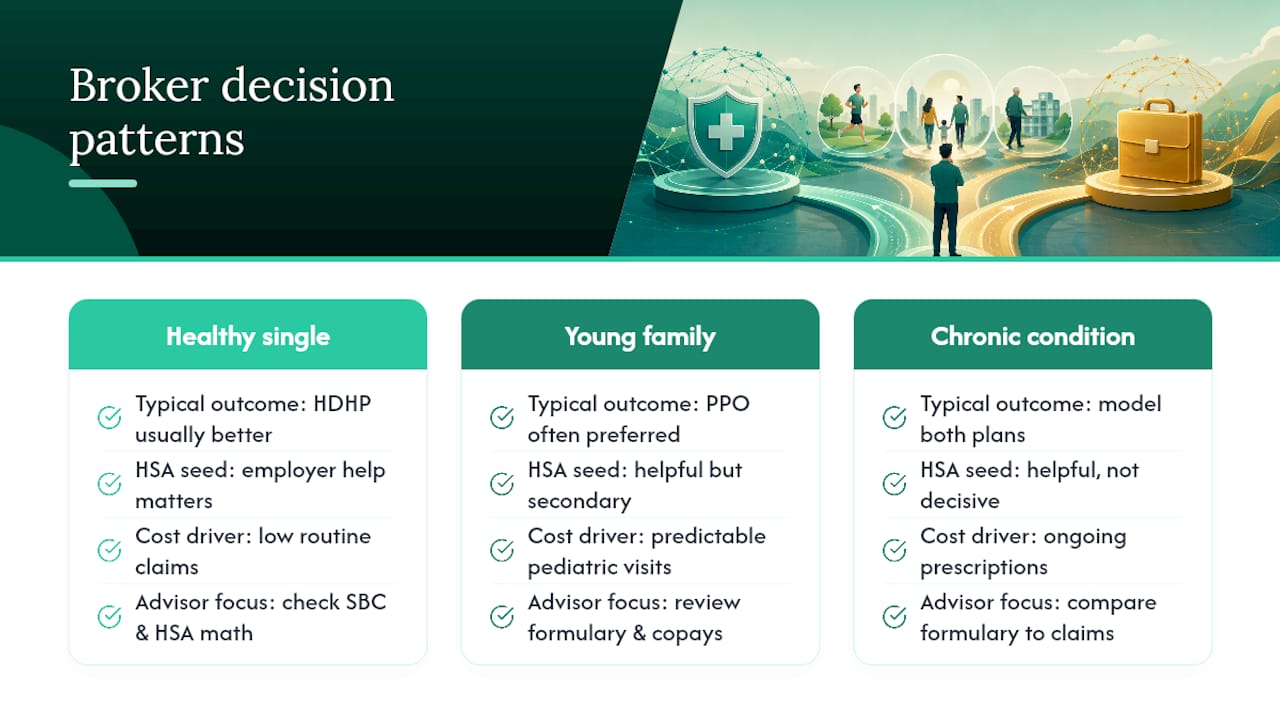
Three patterns show up constantly. A healthy single professional with no regular prescriptions almost always comes out ahead on an HDHP, especially with employer HSA seed money. A family with young kids and predictable pediatrician visits often prefers a PPO’s flat copays, even at a higher premium, because it avoids deductible-year surprises. Someone managing a chronic condition with monthly prescriptions almost always does better modeling both plans against their actual drug list rather than guessing.
When reviewing client options, the SBC and formulary come first, then the HSA math, and only then the premium line. Consulting CMS parameter guidance alongside a client’s actual claims history catches mismatches a quick online comparison tool misses.
— Zach
Get Help Comparing HDHP and PPO Plans in Colorado
Running the total cost math across every plan on your employer’s menu, or every marketplace option if you’re buying individually, takes real time. Simplyinsuranceforyou gives Colorado residents a licensed broker who models premiums, deductibles, and HSA value against your actual prescriptions and claims history, at no direct cost to you, since brokers are paid by the carrier when you enroll.

Whether you’re comparing employer options during open enrollment or shopping individual health insurance in Castle Pines and across Colorado, bring your SBCs, your last year of claims, and your current prescription list to a consultation. From there, ongoing support continues past enrollment, through annual reviews and claims questions, through Simplyinsuranceforyou’s full range of services. Reach out today to get your specific numbers modeled before your enrollment window closes.
This article is general information, not a substitute for advice from a qualified financial advisor. Consult a qualified financial professional about your own circumstances before acting on anything here.
Sources
- Healthcare
- IRS Publication 969 — Health Savings Accounts and Other Tax-Favored Health Plans
- WEX Inc. — HDHP vs traditional health plan (PPO)
- The Motley Fool — HDHP vs PPO (2026)