

High Deductible Plan G: 2026 Costs and Coverage Rules
High Deductible Plan G is a version of Medigap Plan G where you pay a set amount out of pocket each calendar year before the policy pays anything, in exchange for a lower monthly premium. For 2026, CMS sets that deductible at $2,950. Once you hit it, the plan covers the same benefits as standard Plan G, dollar for dollar.
This plan tends to fit two kinds of people well:
- Healthy beneficiaries who rarely see a doctor and want to bank the premium savings.
- Anyone with enough set aside in savings to cover a $2,950 bad year without stress.
It’s a poor fit if you’re managing a chronic condition with frequent Part A or Part B claims, or if a surprise bill of that size would strain your budget. Read on for the mechanics, the eligibility rule that trips people up, and real math on when it pays off.
Key Takeaways
High deductible Plan G trades a lower monthly premium for a $2,950 calendar-year deductible in 2026, and it pays off mainly for healthy beneficiaries who can absorb that risk.
Point Details 2026 deductible is fixed CMS sets the high deductible Plan G threshold at $2,950 for 2026, adjusted yearly for CPI-U. Coverage matches standard Plan G Once you clear the deductible, benefits are identical to standard Plan G, dollar for dollar. Eligibility has a hard cutoff Only beneficiaries new to Medicare on or after January 1, 2020 can enroll in high deductible Plan G. Math depends on usage Low-use years favor high deductible Plan G; high-use years often favor standard Plan G instead. Get local guidance Simplyinsuranceforyou compares real carrier pricing for Colorado residents and supports enrollment and claims afterward.This article is general information, not a substitute for advice from a qualified financial advisor. Consult a qualified financial professional about your own circumstances before acting on anything here.
Table of Contents
- What Does High Deductible Plan G Cover After You Meet the Deductible?
- Who Can Actually Buy High Deductible Plan G?
- How Much Does High Deductible Plan G Actually Cost in 2026?
- Is High Deductible Plan G Worth the Trade-Off?
- How Do You Decide With a Broker’s Help?
- Is the Premium Savings Actually Worth the Risk for You?
- Get Local Help Choosing Between High Deductible and Standard Plan G
- Sources
What Does High Deductible Plan G Cover After You Meet the Deductible?
Once your deductible is satisfied, high deductible Plan G pays exactly what standard Plan G pays. There’s no reduced benefit, no separate coverage tier. Medicare confirms that Plan G, in either its standard or high deductible form, covers:
- Part A hospital coinsurance and coverage for an extra 365 days of hospital care after Medicare benefits run out.
- The Part A deductible in full.
- Part B excess charges, meaning you’re protected even if a provider charges above the Medicare-approved amount.
- Skilled nursing facility coinsurance.
- Hospice care coinsurance or copayments.
Here’s the sequence that confuses a lot of people: Medicare pays its share first, always. Then you’re responsible for whatever Medicare doesn’t cover, which is applied toward your deductible. Only after you’ve personally paid $2,950 in Medicare-covered cost sharing during the calendar year does your Medigap policy start reimbursing you.
Pro Tip: Your Part B deductible counts toward the high deductible Plan G threshold, and so does most other Medicare-covered cost sharing you pay directly, like hospital coinsurance. Copays for anything Medicare doesn’t cover at all don’t count.
Most high deductible Plan G policies also include a modest separate deductible for foreign travel emergency coverage. That’s a different bucket entirely and doesn’t touch your $2,950 threshold.
Who Can Actually Buy High Deductible Plan G?
Not everyone on Medicare has access to this option. CMS restricts high deductible Plan G to people who are new to Medicare on or after January 1, 2020. “New to Medicare” means you turned 65 and became eligible on or after that date, or you first qualified through disability or ESRD on or after that date.
Those who enrolled in Medicare before 2020 and hold a different Medigap plan generally cannot switch into high deductible Plan G. That eligibility line is rigid, and it catches a lot of longtime Medicare beneficiaries off guard when they hear about the premium savings and assume they qualify.
A few other things worth confirming before you get your hopes up:
- Availability varies by state. Not every carrier sells high deductible Plan G everywhere.
- Underwriting rules differ by insurer, so your health history can affect whether you’re accepted outside a guaranteed-issue window.
- Some carriers price this plan aggressively in certain states and barely offer it in others.
Check your specific state and age cohort before assuming the door is open. A Medigap Plan G and Plan N quote comparison for your area will tell you fast whether it’s even on the table.
How Much Does High Deductible Plan G Actually Cost in 2026?
The 2026 deductible is $2,950, and CMS recalculates it every year based on the percentage increase in the CPI-U, rounded to the nearest $10. That means you should expect small, predictable increases’ year over year, not sudden jumps.
Premiums themselves depend on your age, tobacco use, location, and whether the insurer uses issue-age, attained-age, or community rating. The same standardized plan can cost noticeably different amounts from one carrier to the next for identical coverage, which is exactly why comparing quotes matters more than picking a name you recognize.
Here’s how the trade-off plays out in two rough scenarios:
- Low-use year. Say high deductible Plan G runs $70 less per month than standard Plan G in your area. That’s $840 saved annually. If you only rack up $600 in Medicare-covered costs all year, you never touch the deductible and you pocket the full $840.
- High-use year. Same $840 annual premium savings, but you have a hospital stay and hit the full $2,950 deductible. Your net cost that year is $2,950 minus the $840 you saved, or roughly $2,110 more than you’d have paid under standard Plan G.
Carrier product pages generally frame the appeal around exactly this: lower premiums as a bet that pays off if your health holds steady. Get quotes from multiple carriers before deciding. The premium gap that makes this plan worthwhile in one state might not exist in another.
Is High Deductible Plan G Worth the Trade-Off?
The appeal is straightforward: lower monthly premiums, and once you clear the deductible, you get identical coverage to standard Plan G. For a healthy retiree with predictable, low medical usage, it can work out as a genuine bargain. You’re essentially betting your $2,950 exposure against the premium savings, and for a lot of people, that bet pays off most years.
The downside is just as straightforward. You’re carrying real financial risk at the start of every calendar year. A single hospitalization or unexpected diagnosis can mean paying a substantial amount out of pocket before your coverage kicks in at all. That’s a rough fit for anyone managing ongoing treatment or living on a tight fixed income.
A few practical mistakes to avoid:
- Don’t sign up without a cash cushion to cover the deductible if a bad year hits.
- Don’t assume every dollar you spend on healthcare counts toward the deductible. Only Medicare-covered cost sharing applies.
- Don’t assume premiums are the same across insurers. They’re not, and the gap can be significant.
Pro Tip: Run your own numbers before you commit. If your typical annual Medicare-related spending is close to or above the deductible most years, standard Plan G is usually the better financial bet.
How Do You Decide With a Broker’s Help?
Work through this before you talk to anyone selling a policy:
- Estimate your realistic annual Medicare-covered costs based on your last two or three years of care.
- Confirm you could pay $2,950 out of pocket in a bad year without derailing your budget.
- Compare the actual premium gap between high deductible Plan G and standard Plan G in your area, not a national average.
- Verify availability for your state and confirm you meet the new-to-Medicare eligibility date.
Bring these questions to whoever you’re working with:
- Is high deductible Plan G even sold in my state and by which carriers?
- What’s the premium mode, and does it lock in or increase with age?
- What underwriting applies if I’m outside a guaranteed-issue window?
- Exactly which of my costs count toward the $2,950 threshold?
- What are the foreign travel emergency terms and separate deductible?
- What claims support do you offer after I enroll?
Pro Tip: Time your enrollment carefully and confirm the effective date in writing before you accept a policy, so you don’t end up with a coverage gap between your old plan and the new one.
Simplyinsuranceforyou’s licensed brokers walk Colorado beneficiaries through this exact checklist, matched against real carrier options in your zip code, not a generic script.
Is the Premium Savings Actually Worth the Risk for You?
Most of the online chatter about high deductible Plan G treats it like a universal hack for cutting Medicare costs. It isn’t. The math only works if your health usage is genuinely low and stays that way, and nobody can guarantee that for a 70 year old five years running.
What gets underweighted in most advice is the eligibility cliff. If you enrolled in Medicare before January 1, 2020, this conversation may not even apply to you, and I’d rather see that stated plainly upfront than buried after a beneficiary spends twenty minutes comparing premiums.
My honest read: the plan makes the most sense for someone new to Medicare who has a real emergency fund and a track record of low medical usage. It makes the least sense for anyone using premium savings to justify skipping a cash reserve. Priority one isn’t the premium number. It’s whether you can absorb $2,950 in a single bad year without it becoming a financial event. Get that answer honestly before you compare a single quote.
— Zach
Get Local Help Choosing Between High Deductible and Standard Plan G
Simplyinsuranceforyou is the alternative to guessing at national averages for Castle Pines and Colorado residents. Our licensed brokers pull actual carrier pricing for your zip code, so you’re comparing real premium gaps instead of estimates that don’t apply to your state.

A consult with our team covers your current Medicare coverage, your typical annual healthcare spending, and whether high deductible Plan G or standard Plan G actually saves you more given your specific carrier options. Bring your Medicare card, a list of your regular prescriptions and providers, and a rough sense of your healthcare spending over the past two years. There’s no cost to you. Simplyinsuranceforyou is paid by the carrier when you enroll, and we stick around afterward for annual reviews and claims support, not just the sign-up.
Beyond Medigap, we also help with Medicare Advantage, Part D, and individual health insurance for anyone not yet on Medicare. If prescription costs are part of what’s driving your decision, it’s worth knowing how specialty medication pricing can affect your out-of-pocket exposure regardless of which Medigap plan you choose.
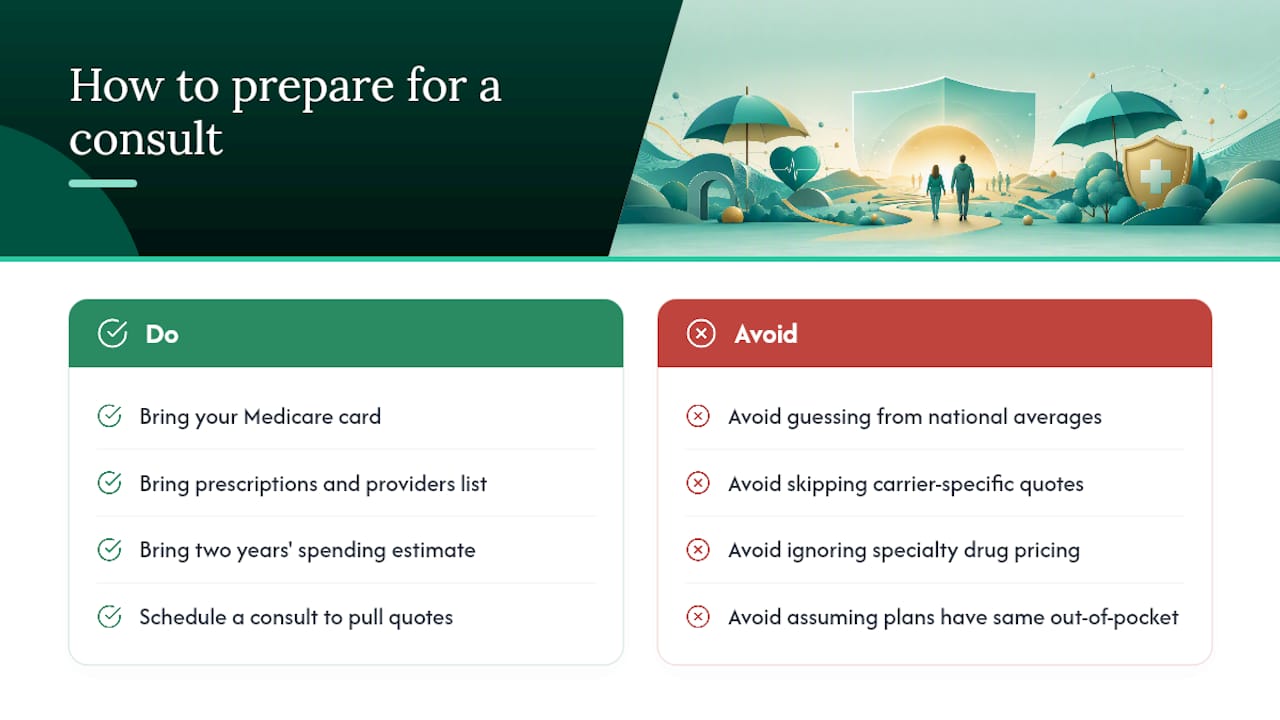
Start with our Medicare guide to get your questions answered, or schedule a consult directly so we can pull quotes for your specific situation.
Sources
- F, G & J Deductible Announcements | CMS
- Compare Medigap Plan Benefits | Medicare
- Shop Medicare Supplement High Deductible Plan G | HealthSpring