
Publication time reported by BabyLoveGrowth, shown in Mountain time. This is not an independently measured first appearance on this website.

Confirm U.S. Medicare Telehealth Coverage in 2026: Deadline Dec 31, 2027
Medicare covers a wide range of telehealth services in 2026, and the flexibilities that let you see a provider from home, rather than driving to a clinic, are extended through December 31, 2027. Behavioral and mental health telehealth is now a permanent Medicare benefit. Most other telehealth flexibilities remain temporary, tied to the current deadline through the end of 2027, so confirm your specific service with your provider or Medicare Advantage plan before you log in.
TL;DR:
- Medicare’s telehealth rule allowing patients to see providers from home extends through December 2027, with most flexibilities remaining temporary.
- Telehealth services now include permanent coverage for behavioral and mental health, with audio-only sessions allowed for these providers.
- Costs for telehealth visits typically mirror in-person charges, with a 20% coinsurance after the Part B deductible, and billing rates may differ depending on the setting.
- Patients can see a wide range of providers, including mental health specialists, with audio-only visits permitted in many cases, especially for behavioral health.
- The extension beyond 2027 depends on Congressional action; beneficiaries should verify their plan’s coverage, confirm billing codes, and keep thorough records in case rules change.
Table of Contents
- Which Telehealth Flexibilities Are Still in Effect for Medicare in 2026?
- What Telehealth Services Does Medicare Actually Cover?
- How Much Will You Pay for a Medicare Telehealth Visit?
- Who Can You See by Telehealth, and Does Audio-Only Count?
- What Happens to Telehealth Coverage After 2027?
- A Quick Checklist Before Your Next Telehealth Appointment
- How a Licensed Broker Helps You Confirm Telehealth Benefits
- What Beneficiaries Should Watch Now
- Get Help Confirming Your Telehealth Coverage
- Where to Verify the Official Rules
- Sources
Which Telehealth Flexibilities Are Still in Effect for Medicare in 2026?
The headline change for 2026 is simple: your home still counts as an eligible location for most telehealth visits; that rule holds through the end of 2027. Before the COVID era, Medicare generally required patients to travel to a clinic or rural health facility to “originate” a telehealth visit. Congress kept waiving that requirement year after year, and the most recent extension pushes it out through December 31, 2027.
A quieter but important shift came from CMS itself. Starting in calendar year 2026, CMS stopped labeling new telehealth services as “provisional.” Once a service gets added to the Medicare telehealth list now, it stays there permanently.
What this means in practice for you:
- Your living room, kitchen table, or bedroom qualifies as a valid location for most telehealth appointments through 2027.
- You don’t need to live in a rural or medically underserved area to use most telehealth benefits, at least not until the current extension expires.
- The official roster of covered services changes periodically, so check the CMS telehealth services list directly if you’re unsure whether a specific visit type qualifies.
What Telehealth Services Does Medicare Actually Cover?
Coverage stretches further than a basic video call with your primary doctor. Medicare telehealth benefits typically include mental health counseling, follow-up visits for chronic conditions like diabetes or hypertension, medication management, nutrition therapy, and certain specialist consultations.
It helps to know the three categories Medicare treats differently for billing purposes:
- Telehealth visits: Live, real-time video (or sometimes audio-only) interaction that substitutes for an in-office appointment.
- E-visits: Asynchronous communication through a secure patient portal, where you message your provider and they respond within a few days rather than meeting live.
- Virtual check-ins: Brief, synchronous phone or video contact, usually under 10 minutes, often used to decide whether an in-person visit is needed.
Each category has its own billing code, which affects what you’re charged. Remote patient monitoring, where a device tracks your blood pressure or glucose and transmits it to your care team, follows yet another set of billing rules and isn’t interchangeable with a standard telehealth visit.
Statistic Callout: Behavioral and mental health telehealth, including audio-only sessions, is permanently covered with no 2027 expiration date attached, unlike most other telehealth categories.
How Much Will You Pay for a Medicare Telehealth Visit?
Cost sharing for telehealth mirrors what you’d pay for the same service delivered in person, with a few wrinkles worth knowing.
Under Original Medicare, once you meet your Part B deductible, you’ll typically owe 20% coinsurance of the Medicare-approved amount. Telehealth doesn’t get a special discounted rate just because you stayed home.
One detail that surprises people: when a doctor bills a home-based telehealth visit, it’s often paid at the nonfacility rate, similar to an in-office appointment, rather than a lower facility rate. That can mean your coinsurance is calculated against a higher approved amount than you might expect.
- Original Medicare: Part B deductible, then roughly 20% coinsurance
- Medicare Advantage: Varies widely by plan, and many plans now advertise $0 copays for virtual visits
- Remote monitoring services: Billed separately, sometimes with monthly device or data fees
Pro Tip: Before your appointment, ask the front desk staff how the visit will be coded. A five-minute question can save you from an unexpected bill weeks later.
Who Can You See by Telehealth, and Does Audio-Only Count?
Not every provider type qualifies to bill Medicare for telehealth, and audio-only visits carry their own rules.
- Physicians, nurse practitioners, and physician assistants remain the core group of eligible distant-site practitioners, billing telehealth visits the same as they would an in-office encounter.
- Behavioral health providers, including licensed clinical social workers and psychologists, get permanent audio-only allowances, meaning a phone call without video still counts as a covered visit for mental health care.
- Federally Qualified Health Centers and Rural Health Clinics can serve as distant-site providers, billing for telehealth services delivered by their staff, through at least December 31, 2027.
- Audio-only visits for non-behavioral care are allowed in many circumstances, but the provider’s system has to support it and you generally need to consent to a phone-only format rather than video ahead of time.
If you’re not sure whether your provider’s office is set up correctly, a quick look at how established telehealth providers structure their scheduling and eligibility confirmation process shows what a well-run intake conversation should cover before you ever get on the call.
What Happens to Telehealth Coverage After 2027?
Here’s the timeline that matters most: the Consolidated Appropriations Act of 2026, signed February 3, 2026, extended most Medicare telehealth flexibilities through December 31, 2027. That’s not a permanent fix. It’s the latest in a string of short-term patches Congress has applied since the pandemic-era rules first expired.
If Congress doesn’t act again before the deadline, the flexibilities could snap back to pre-pandemic rules in 2028: originating site restrictions requiring in-person visits at certified rural facilities, a shrunken list of eligible providers, and stricter geographic limits on who can use telehealth at all.
Statistic Callout: KFF’s analysis points to these repeated short-term extensions as a source of real operational uncertainty for both patients and providers, since neither side can plan far past the current deadline.
What you can do now:
- Watch for Congressional action or new CMS rulemaking as 2027 approaches.
- Keep records of your telehealth visits and how they were billed, in case coverage rules shift and you need documentation of prior usage.
- Don’t assume a service covered today will automatically be covered in 2028.
A Quick Checklist Before Your Next Telehealth Appointment
Four questions, asked in advance, cover most of what goes wrong with telehealth billing surprises.
- Confirm participation. Verify your provider accepts Medicare, and if you’re on a Medicare Advantage plan, confirm they’re in-network for that plan specifically.
- Ask how the visit is coded. A “telehealth visit,” an “e-visit,” and a “virtual check-in” carry different billing codes and different costs. Knowing which one applies to your appointment matters more than the technology itself.
- Verify the modality. If you were expecting video and the office only offers audio-only, or vice versa, find out before the appointment, not during it.
- Get a cost estimate. Ask billing staff what you can expect to owe, and write it down along with the date and the staff member’s name.
Pro Tip: Save every telehealth confirmation email and billing statement in one folder, physical or digital. If a claim gets miscoded, that paper trail is what gets it fixed fast.
How a Licensed Broker Helps You Confirm Telehealth Benefits
Reading CMS rules is one thing. Knowing how your specific Medicare Advantage plan handles telehealth copays is another. Simplyinsuranceforyou works with Colorado beneficiaries to compare plan documents side by side, flag which plans offer $0 virtual visit copays, and follow up during claims season if a telehealth bill looks off. That kind of plan-specific verification is exactly where a licensed broker earns their keep, since no two Advantage plans structure this benefit the same way.
What Beneficiaries Should Watch Now
The 2027 deadline isn’t a crisis, but it’s not nothing either. Congress has extended these flexibilities before, and it likely will again, but “likely” isn’t a plan. If telehealth has become part of how you manage a chronic condition or see a therapist, treat the next eighteen months as a window to confirm your coverage is solid, not a set-it-and-forget-it situation. If you want a second set of eyes on your plan, a licensed broker can walk through the specifics with you.
— Zach
Get Help Confirming Your Telehealth Coverage
Simplyinsuranceforyou gives Colorado Medicare beneficiaries something the CMS website can’t: a real person who checks your specific plan’s telehealth rules against your actual health needs, at no direct cost to you. Rather than guessing whether your Medicare Advantage plan covers that therapy session or follow-up call, a licensed broker can pull up your plan documents and tell you exactly what you’ll pay before you book the appointment.

Simplyinsuranceforyou serves clients throughout Castle Pines and across Colorado, with support available by phone for those who’d rather not make the drive. Whether you’re weighing Medicare Advantage plans during enrollment or just want someone to double check a telehealth benefit before your next visit, the Medicare Guide is a good place to start, or you can reach out directly to compare your options with a licensed agent who knows the Colorado market.
Where to Verify the Official Rules
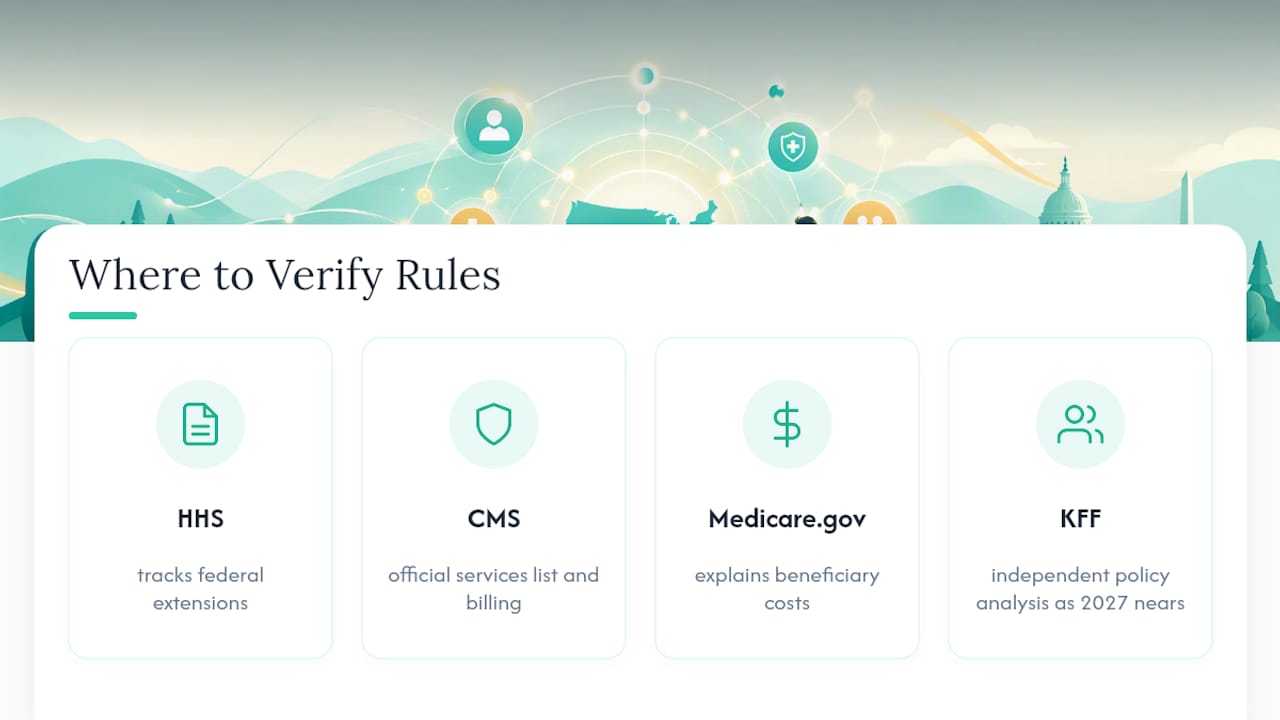
For the most current rules, go straight to the source. HHS’s telehealth policy page tracks federal extensions as they happen. CMS maintains the official telehealth services list and billing guidance. Medicare.gov explains what beneficiaries pay, and KFF offers independent policy analysis as the 2027 deadline approaches. Check these periodically rather than relying on secondhand summaries.
This article is general information, not a substitute for advice from a qualified doctor. Consult a qualified healthcare professional about your own circumstances before acting on anything here.